
How to Start Collecting Art, Before you tell Yourself You Can't
Patina — Artfully Unmade
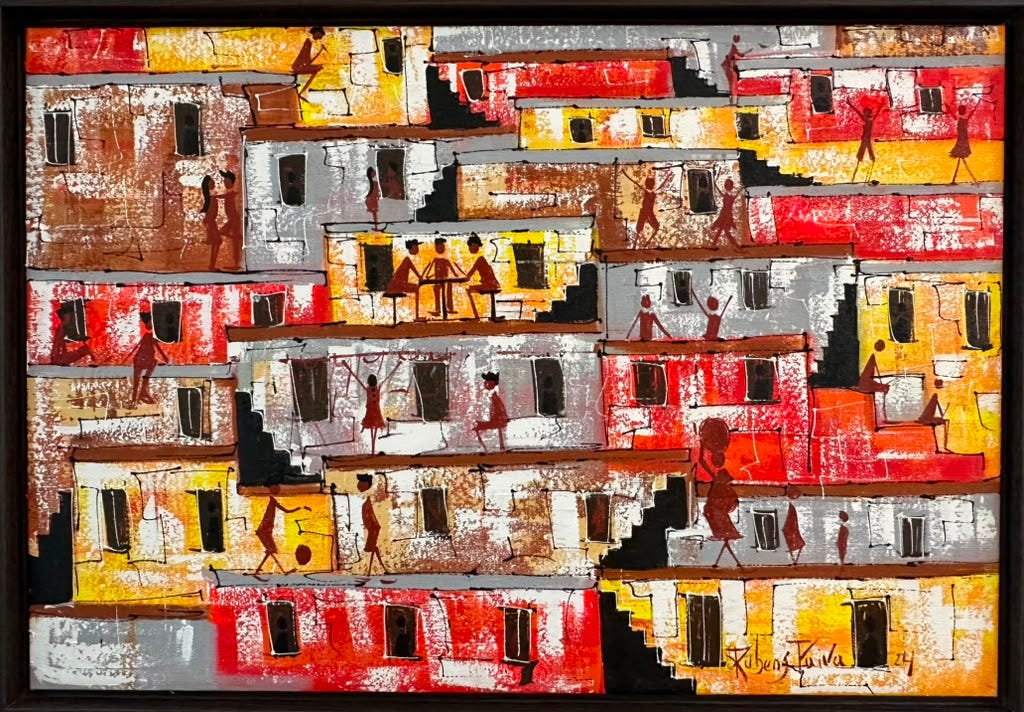
The reason most of us don’t own art isn’t money. It’s a quiet conviction that collecting is something other people do — people with a spare wall the size of a tennis court, an advisor, a vocabulary. So we buy the framed print from the homeware shop, the one currently hanging in four hundred thousand other sitting rooms, and we tell ourselves we’ll get the real thing later, when we’re the kind of person who does that.
Here’s the thing. You already are.
Know what you’re actually buying
When you start looking, three categories of work will come at you, and the differences between them matter more than the prices.
A reproduction — also called an open edition — is a photograph of an artwork, printed as many times as the market will take. The poster, the homeware print. Nothing wrong with it, but it’s décor, and it will never be anything else.
A limited edition print is a different animal: a work the artist made as a print — a screenprint, etching, lithograph, linocut — produced in a fixed number, usually signed and numbered in pencil in the margin (you’ll see something like 12/50, meaning the twelfth of fifty). The number is the point. When they’re gone, they’re gone, and you own one of a finite set of objects the artist actually touched.
An original is exactly that — the singular thing. A painting, a drawing, a work that exists once and only once. More within reach than you’d think, especially from artists early in their careers.
If you remember one distinction, make it reproduction vs. everything else. It’s the line between owning a copy and owning a piece.
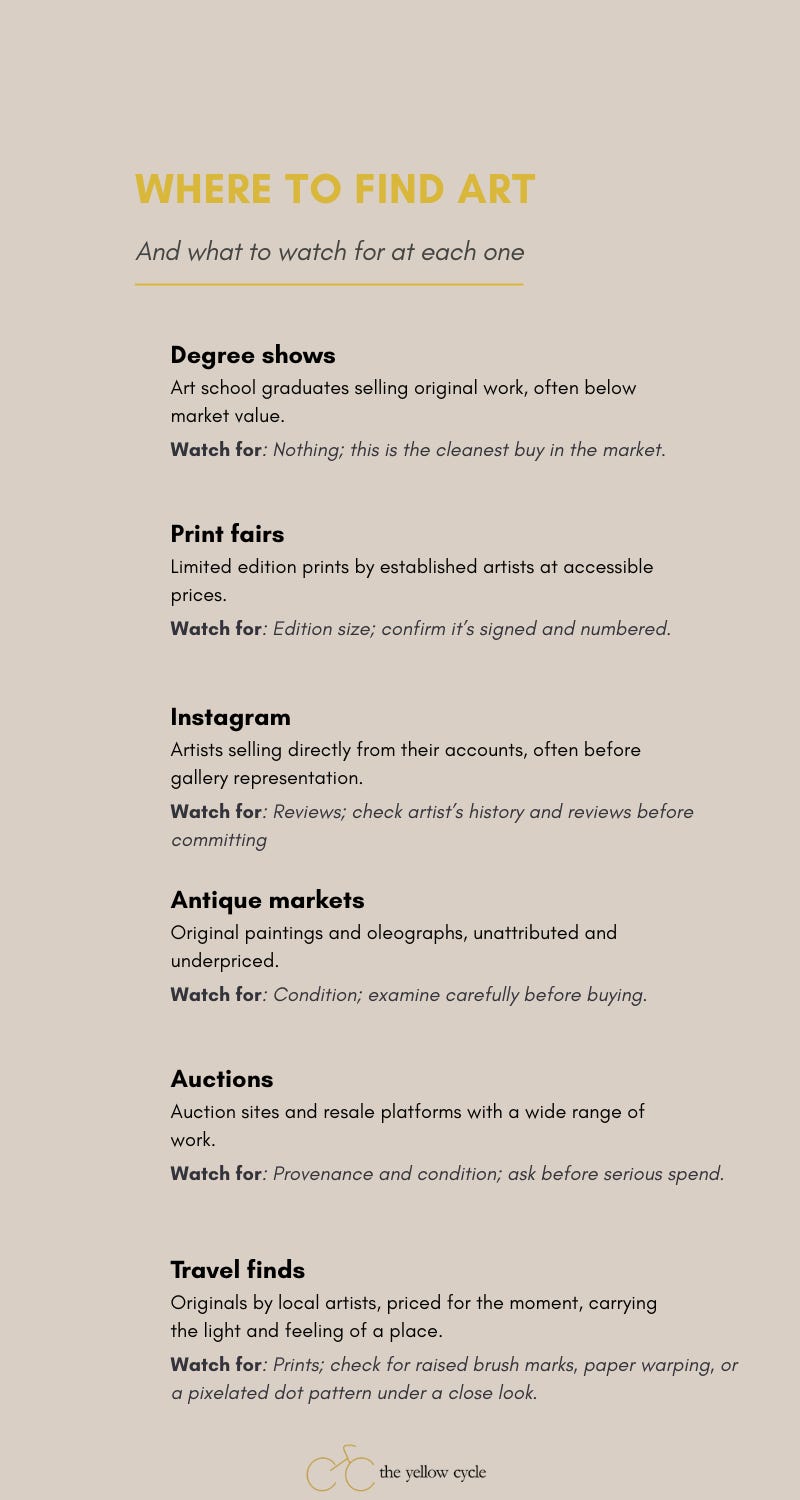
Where to find art
The good work is in more places than you'd think. Here's where, and what to check before you spend.
Two things nobody tells you
The frame is half the result — budget for it, sometimes it costs more than the art. Second, buy what you can’t stop looking at. A $50 acrylic from a thrift store that stops everyone who walks into your living room for twenty years has outperformed every piece bought with one eye on resale. You are not a hedge fund.
Start with one
Not a wall. One piece of art. The mistake is treating collecting as a project to be completed, when it’s a habit to be acquired. Buy a single piece you love, live with it for a season, notice what it taught you about what you respond to. The second piece will be smarter than the first. By the fifth you’ll have something nobody can buy ready-made: a wall that could only be yours.
That Dalí our editor stood in front of for twenty-five minutes? You’re likely not going to own it. But the impulse — I want to keep looking at that — is the only qualification collecting has ever required. The rest is just knowing where to stand.